
The Carpet Guy / JOURNAL
Why Restretching Your Carpet Will Save You Money !
Updated 18 November 2026 · By The Carpet Guy
Rippled, buckled or loose carpet? Learn what causes it, when restretching fixes it, what DIY can’t do, and how to get a free quote in Auckland.
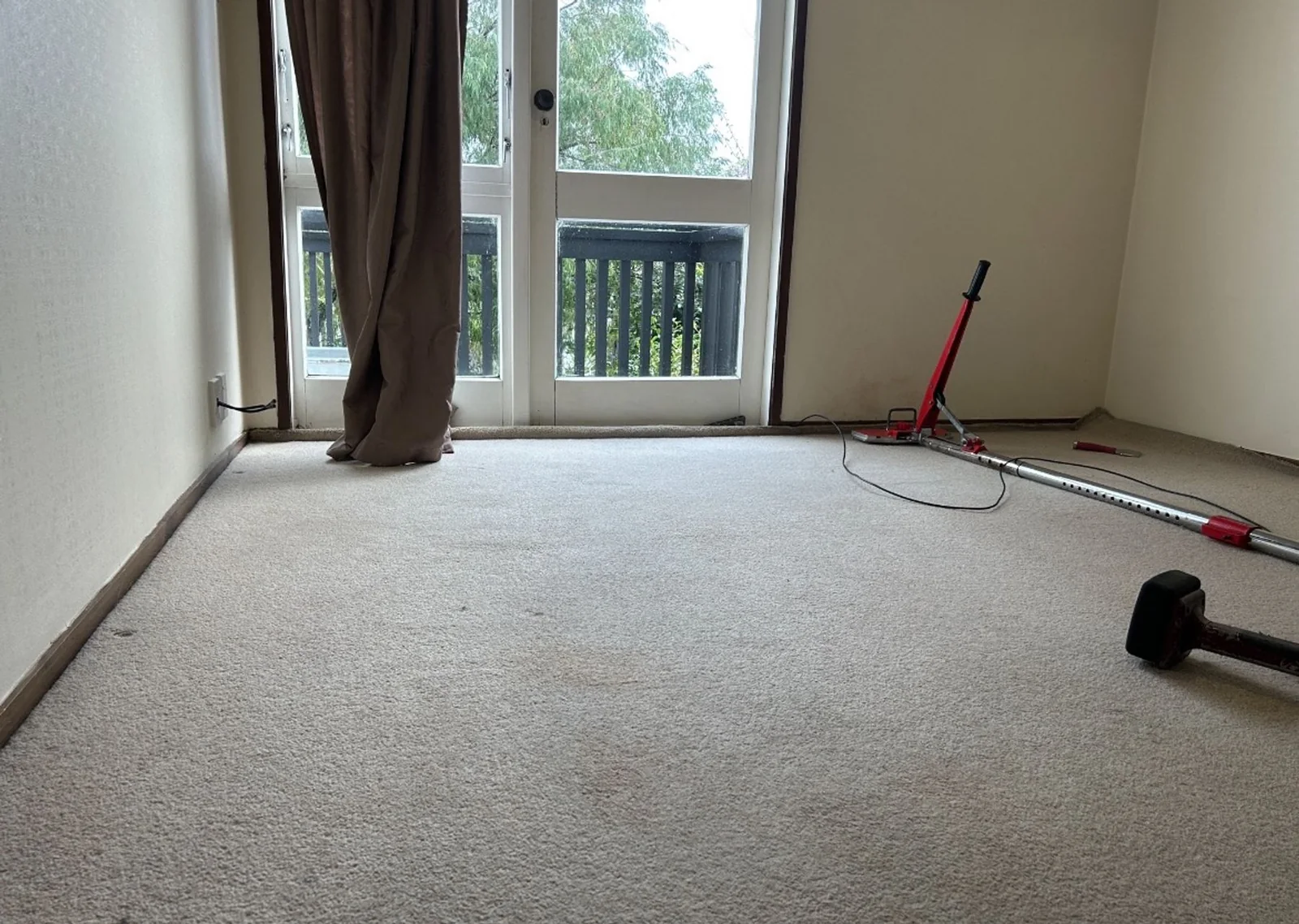
QUESTION: Does my rippled or loose carpet need restretching, or does it need replacing ?
ANSWER: If the carpet is in decent condition and has simply come loose, it needs restretching, not replacing. Carpet restretching in Auckland costs a fraction of new carpet, and when it’s done properly the ripples don’t come back. The only time restretching won’t work is when the carpet itself is old, brittle or damaged underneath.
Rippled carpet starts small and gets worse. A little wave near a doorway, a bubble in the middle of the lounge, a corner that’s lifted off the floor. Most people ignore it for months, and then somebody trips on it.
This guide explains what causes carpet to buckle, how to tell whether restretching will fix it, what you can realistically do yourself and when it’s smarter to get a professional in. If you’d like a quote for carpet restretching in Auckland, the details are at the bottom of the page.
What Is Carpet Restretching ?
Most carpet in Auckland homes is “stretch-in” carpet. It isn’t glued to the floor. It’s pulled tight over the underlay and hooked onto smoothedge (also called gripper rod), a thin strip of timber with small pins that’s fixed around the edge of every room. The tension in the carpet is what holds it flat.
Restretching puts that tension back. The carpet is released from the smoothedge along one or more walls, pulled tight with a power stretcher, hooked back onto the pins, then trimmed and tucked neatly into the gap at the skirting. Done properly, there’s nothing to see afterwards except carpet that finally lies flat.
What Causes Carpet To Ripple And Buckle ?
Carpet doesn’t ripple for no reason. If you understand the cause, you can tell whether restretching will be a permanent fix or a short-term one.
- Not enough tension at installation. This is the most common cause. If the carpet was stretched too loosely in the first place, it will relax and ripple sooner or later.
- Humidity. Carpet takes up moisture from the air and relaxes, and wool is the most sensitive. A humid Auckland summer followed by a damp winter is exactly the sort of swing that loosens carpet.
- Worn or compressed underlay. Once the underlay flattens, there’s less support under the carpet and it starts to move.
- Furniture and traffic. Dragging a heavy couch or bed across the carpet pulls it off the smoothedge. Hallways and doorways take the most foot traffic and are usually the first places to loosen.
- Too much water. Over-wet cleaning or a flood leaves the carpet wet, and wet carpet relaxes.
- Damaged smoothedge. If the pins are bent or the strip is broken, the carpet won’t hold, no matter how hard it’s stretched.
Here’s the problem. If the real cause is worn underlay or damaged smoothedge, stretching the carpet alone will only buy you a few months. A good repairer checks both before pulling a single metre of carpet.
Signs Your Carpet Needs Restretching
You don’t need to be an expert to spot a loose carpet. Look for:
- Ripples, waves or bubbles on the surface, especially along walls and in doorways
- Corners or edges that have lifted away from the smoothedge
- A ripple that moves when you push on it with your foot
- Carpet that bunches up when furniture is moved
- Anyone catching a toe on the carpet, particularly kids and older people
Pro Tip For Homeowners: Lift a corner at a doorway and look at the back of the carpet. If it’s flexible and the backing looks sound, it’s a tension problem and restretching should fix it. If the backing is crumbling, flaking or brittle, the carpet is past stretching and you’re looking at repair or replacement instead.
Why Is Restretching Worth Doing ?
A ripple is a high spot. Every footstep lands on it, so it takes far more wear than the flat carpet around it. The fibres get crushed, the backing creases along the fold, and that damage can’t be stretched out later. So what happens if you leave it for a couple of years ? You end up with a worn line across the room and a much bigger bill.
Restretching early gives you:
- A flat, tidy carpet. It looks the way it did when it was first laid.
- A longer-lasting carpet. Even tension means even wear.
- A safer home. Ripples are a genuine trip hazard, and you SHOULD take them seriously if you have young children or elderly family members.
- A far lower cost than replacing. New carpet means new underlay, removal of the old carpet, disposal and fitting. Restretching is one visit.
Can You Restretch Carpet Yourself ?
Sometimes. Fair is fair, and a small ripple in one corner of a bedroom is a job a handy person can do with a hired knee kicker. The basic process looks like this:
- Clear the room. Get all the furniture out, or at least away from the walls you’ll be working on.
- Release the carpet. Starting in a corner, pull the carpet off the smoothedge along one or two walls using pliers.
- Check what’s underneath. Look at the underlay and the smoothedge. If either is damaged, fix it now, not later.
- Stretch it. Working from the opposite side of the room, use the knee kicker to push the carpet toward the wall in small, even steps and hook it onto the pins.
- Trim and tuck. Cut off the excess with a sharp knife and tuck the edge neatly into the gap at the skirting.
- Check your work. Walk across the carpet and look for any remaining waves before putting the furniture back.
That’s the short version, and it’s harder than it sounds. A knee kicker can’t pull a whole room’s worth of carpet tight, so it only suits small areas. Stretch too little and the ripples come back. Stretch too much and seams can peak, patterns can distort and you can end up cutting the carpet too short, which can’t be undone.
When To Call A Professional
A professional carpet repairer has a power stretcher, which pulls the whole width of the room evenly, and the experience to know how much tension a particular carpet needs. Get a professional in if:
- The ripples run across a whole room, or through more than one room
- The carpet is wool, patterned or has seams in the stretch area
- It’s rippled before, and the ripples came back
- The carpet has been wet, from a flood or heavy cleaning
- You aren’t confident cutting and tucking edges neatly
A repairer will also look at the cause. If the underlay has collapsed or the smoothedge is damaged, they’ll tell you, and that’s far better than paying for a stretch that doesn’t last.
When Restretching Won’t Work
Restretching isn’t a miracle. It won’t help if:
- The backing is brittle or crumbling, because the carpet will tear when it’s pulled
- The carpet has been wet long enough that the backing has separated
- The carpet has been restretched several times already and has nothing left to give
- The pile is worn flat across the whole room
In those cases a patch or full replacement is the honest answer, and a good repairer will say so. If you want to know whether damage can be patched instead, read the guide to carpet patch repair in Auckland.
What Affects The Price Of Carpet Restretching In Auckland ?
Every job is different, so a fair price comes from seeing the carpet. The main things that affect cost are:
- The size of the area and the number of rooms
- How much furniture has to be moved
- Whether the carpet needs trimming, or seams need attention
- Whether the underlay or smoothedge needs replacing as well
- The type of carpet, since wool and synthetic behave differently
A few clear photos of the ripples are usually enough to give you a real quote rather than a vague range.
Carpet Restretching FAQs
How long does restretching take ? Most restretching jobs are finished in a single visit, often within a few hours. Larger jobs or several rooms can take longer.
Will the ripples come back ? Not if the cause has been fixed. If the carpet was stretched properly and the underlay and smoothedge are in good shape, a restretch should last for years.
Can wool carpet be restretched ? Yes. Wool takes more care because it reacts to humidity, but it restretches well when the backing is sound.
My carpet rippled after it was cleaned. What should I do ? Give it a few days to dry out fully before you decide anything. Wet carpet relaxes, and some of it settles as it dries. If the ripples are still there after that, it needs restretching.
Do I need to move the furniture ? For restretching, the room should be cleared as much as possible. Heavy items like wardrobes and bookcases are the main issue, so mention them when you ask for a quote.
Is restretching the same as relaying carpet ? Not quite. Relaying means lifting the carpet and laying it again, for example after wardrobe installation or underlay replacement, and it always finishes with a restretch.
The Final Word
Carpet that has come loose is usually fixable. Ripples that are left alone get worse, and a trip hazard that costs a little now costs a lot later. If the carpet is sound, restretching is the cheap, quick fix, and it SHOULD be the first thing you consider before anyone suggests replacing it.
If you aren’t sure which category your carpet falls into, a few photos will tell a repairer most of what they need to know.
Get A Free Carpet Restretching Quote In Auckland
Send a few photos of the ripples and find out whether your carpet can be saved. Carpet restretching is available across Auckland.
Phone: 021 063 8772
Email: info@thecarpetguy.co.nz